2026-27 TRANSITION TO SCHOOL YEAR REGISTRATION
Everything MDA families need to know about the shift from birth-year to school-year registration, including ID sessions, timelines, and resources.


If you have any questions, please feel free to contact our age group directors:
• U7: Jim Biewer | jim.biewer@midevelopmentacademy.com
• U8 to U12 Girls: Sam Harrington | sam.harrington@midevelopmentacademy.com
• U8 to U12 Boys: John Bache | john.bache@midevelopmentacademy.com
• U13 to U18 Girls: Richard Nagy | richard.nagy@midevelopmentacademy.com
• U13 to U18 Boys: Greg Perkins | greg.perkins@midevelopmentacademy.com

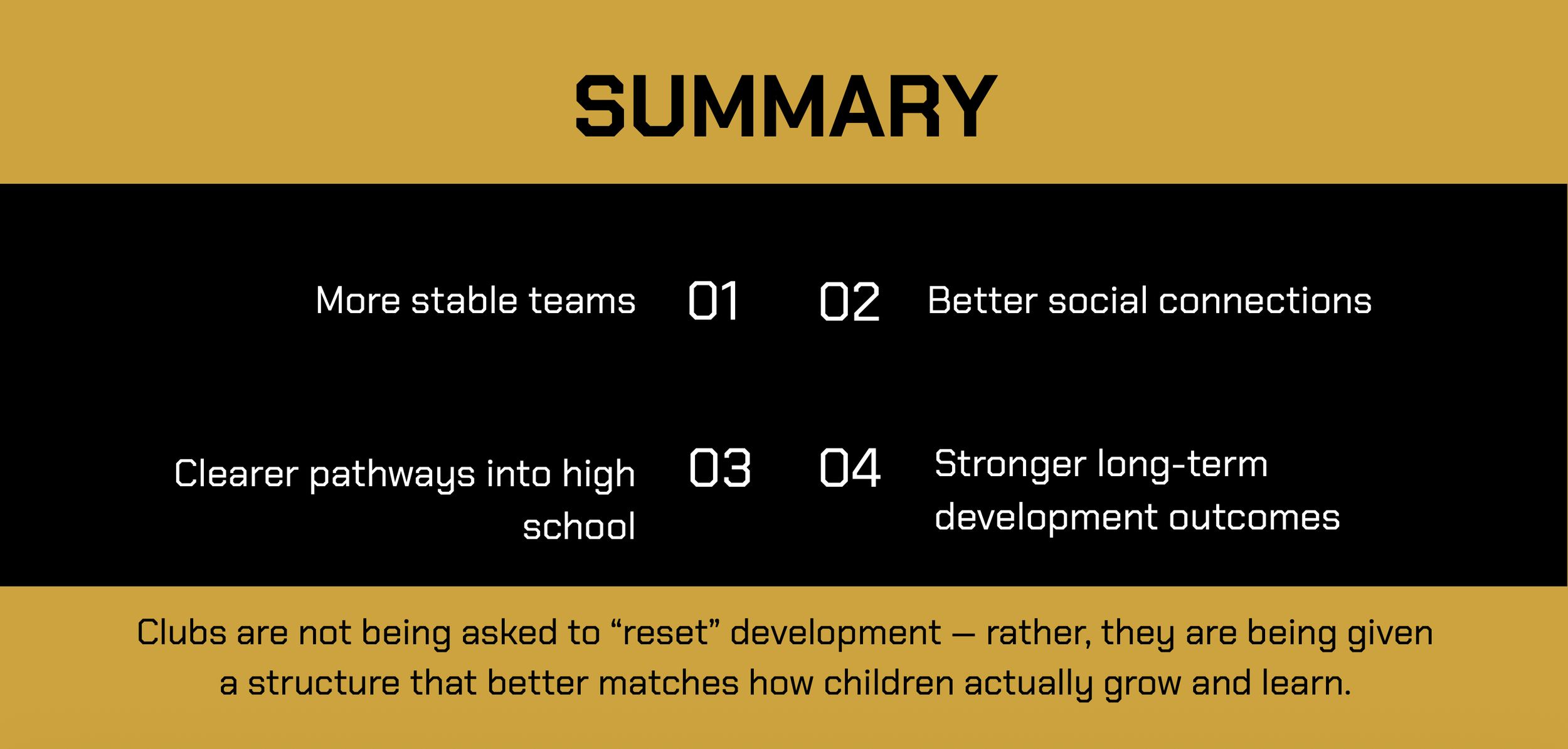
WHY IS YOUTH SOCCER MOVING BACK TO A SCHOOL-YEAR CUTOFF?
BETTER ALIGNMENT WITH SCHOOL & SOCIAL DEVELOPMENT
Most children progress socially, emotionally, and cognitively alongside their school classmates, not strictly by birth year.
1. Players are typically in the same grade as their friends
2. Team environments better match social maturity
3. Stronger peer relationships and team cohesion
This alignment is especially important in younger age groups, where social comfort directly impacts confidence and enjoyment.
REDUCED DISRUPTION DURING KEY TRANSITION YEARS
Birth-year groupings often caused players to be:
Split from their school friends
Moved between teams during elementary → middle school transitions
Placed with peers they rarely interact with off the field
The school-year model provides greater continuity through:
Elementary school
Middle school
Entry into high school soccer
CLEARER PATHWAY INTO HIGH SCHOOL SOCCER
High school teams are already organized by grade level, not birth year.
Aligning club teams with school year:
Smooths the transition into high school programs
Reduces confusion for families and coaches
Supports long-term planning for players entering 9th grade
IMPROVED RETENTION & PARTICIPATION
National data from governing bodies has shown:
Higher dropout rates in late-born players under the birth-year model
Increased frustration and disengagement among younger players in each birth year
The school-year cutoff helps:
Reduce relative-age disadvantages
Keep more players involved longer
Support confidence and enjoyment
CONSISTENCY ACROSS MAJOR ORGANIZATIONS
With US Club Soccer, US Youth Soccer, and AYSO aligned under the same cutoff:
Families face less confusion between leagues
Players don’t shift age groups depending on competition
Clubs can plan long-term development more effectively
SUPPORTS LONG-TERM PLAYER DEVELOPMENT
From a development standpoint, grouping players by school year:
Better aligns physical, emotional, and cognitive growth
Allows coaches to tailor sessions more effectively
Reduces extreme maturity gaps within teams
This approach supports a more balanced learning environment, particularly during growth spurts and puberty.